Cleaning washing machines
Last updated:
Regularly cleaning your washing machine is an essential part of your household routine. It is one of the most frequently used appliances in the home—yet it is often neglected. It happens in every household sooner or later: you open the washing machine door and are hit by a musty odor; your freshly washed laundry doesn't smell the way it should—it stinks! Such situations are often a sign that the machine needs a thorough cleaning.
Regular cleaning is essential to ensure hygienic laundry, avoid high energy costs, prevent unpleasant odors, residue, and mold growth, and extend the appliance's lifespan. Daily use causes dirt, detergent residue, and limescale to accumulate inside the machine, which can lead to unpleasant smells and reduced washing performance. These residues foster the growth of mold and bacteria, particularly in damp areas such as the drum, the door seals, and the detergent dispenser.
In this comprehensive guide, you will learn everything you need to know about cleaning your washing machine—from how often to clean it to effective household remedies.
How often should your washing machine be cleaned?
Did you buy a new washing machine last year, only for it to suddenly start smelling unpleasant? Regular cleaning prevents unpleasant odors, reduced washing performance, and even damage, ultimately saving you money in the long run. But how often should you clean it? The user manual for your specific model often provides detailed instructions on the frequency and method for cleaning and descaling the machine. Manufacturers such as Bosch, Siemens, Miele, and AEG emphasize the importance of proper maintenance to extend the appliance's lifespan and ensure optimal functionality.
The frequency with which a washing machine should be cleaned and descaled depends on several factors, including how often it is used, the type of clothing being washed, local water hardness, and the type of detergent used. A good rule of thumb is to clean your washing machine at least once a month and descale it every three months—or after every 30 wash cycles—depending on water hardness. This keeps your machine running efficiently and ensures your laundry stays fresh and clean. Here are some guidelines to help you decide on the best maintenance schedule:
1. Frequency of use
Regular use: If you use your washing machine several times a week, it is recommended to clean the drum and seals monthly to prevent residue and odors. Infrequent use: If the machine is used less often, cleaning it every two to three months is usually sufficient.
2. Water hardness
Limescale deposits build up more quickly in regions with hard water. In such cases, descale your washing machine at least every two to three months. With soft water, the descaling interval can be extended to four to six months.
3. Detergent and temperature
Liquid detergents tend to leave behind residues that require more frequent cleaning. Low wash temperatures promote the growth of mold and bacteria; therefore, run a wash cycle at 60°C or 90°C regularly to kill germs.
4. Manufacturer instructions
Consult your washing machine's operating manual. Manufacturers such as Bosch, Siemens, or Miele provide specific recommendations for cleaning and descaling.
Note: The intervals mentioned above are merely recommendations; you should adjust them according to your individual washing habits and specific washing machine.
How does the cleaning of your washing machine work?
There are various methods for thoroughly cleaning your washing machine. In this section, you will learn how to specifically clean and maintain the machine's individual components.
Preparation: The washing machine must be completely empty for the cleaning process.
Cleaning the washing drum: Start with a thorough cleaning of the drum. This is the heart of the washing machine where the laundry is washed, yet detergent residue, dirt, and limescale accumulate here over time. Cleaning the drum is therefore essential. You can use Dr. Beckmann Washing Machine Hygiene Cleaner for this purpose. It not only cleans the machine but also reliably eliminates 99.99% of bacteria, fungi, and viruses, thereby removing unpleasant odors. Pour the entire contents of the package directly into the drum and select the main wash cycle (at a minimum of 60°C). This effectively kills germs, bacteria, and mold. Once the program finishes, you can use the washing machine as usual.
Cleaning the lint filter: The lint filter is another important component that should be cleaned at least every one to two months. Lint, hair, and other residues collect here and can impair water flow. To clean it, open the filter flap (usually located at the bottom front of the machine) and place a towel or bowl underneath to catch any excess water. Remove all lint and debris, then rinse the filter under hot water.
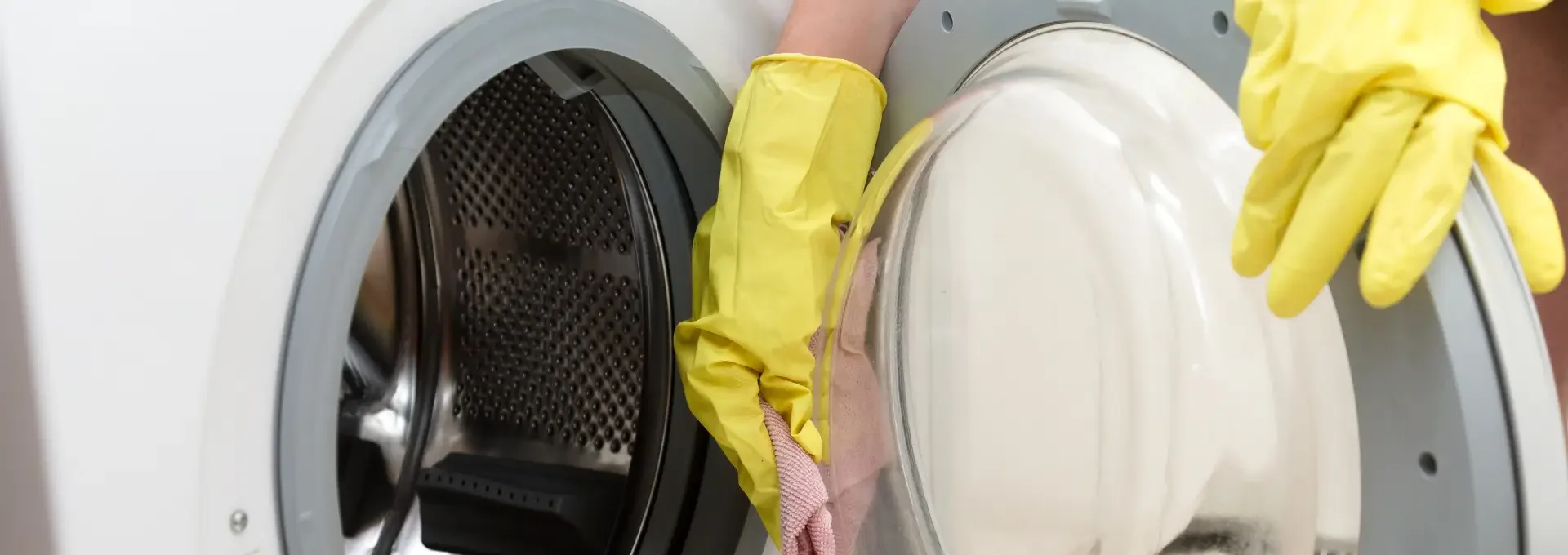
Cleaning the drum's rubber seal: The rubber seal is particularly prone to mold growth and dirt accumulation because it remains damp after every wash cycle. If these seals are not cleaned regularly, mold and bacteria can accumulate, causing unpleasant odors. Dr. Beckmann Washing Machine Complete Care eliminates these odors using the patented Neofresh® formula and protects delicate metal parts. To clean, apply 10 ml (2–3 squirts or 2 teaspoons) of the liquid to a sponge and clean the window and rubber seal.
Cleaning the detergent drawer separately: Detergent residue and limescale deposits can accumulate, particularly in the detergent drawer, so you should wipe this area thoroughly. You can also remove the drawer and soak it separately for 30 minutes in a solution of 50 ml of Dr. Beckmann Washing Machine Complete Care mixed with 4 liters of warm water. For stubborn dirt, use a toothbrush to scrub away any residue. Pour the remaining contents of the bottle into the washing machine's main detergent compartment and run a wash cycle at 60°C. Once the program finishes, you can use the washing machine as usual.
Cleaning filters and hoses: The hoses that feed water into the washing machine can become clogged with limescale and dirt over time. The drain hose should also be checked and cleaned regularly to prevent blockages. To clean them, first inspect the hoses for visible limescale deposits and dirt, cleaning them with a damp cloth if necessary. Add Dr. Beckmann Machine Descaler directly into the washing drum and select a wash program with a temperature of at least 60°C to ensure maximum effectiveness. Limescale often builds up on the heating elements and internal pipes of the washing machine. A hot wash cycle ensures these areas are thoroughly flushed, allowing the dissolved limescale to be completely removed and washed away with the wastewater. Once the program finishes, you can use the washing machine as usual.
Special tip: For quick, easy, and effective maintenance cleaning, we recommend Dr. Beckmann Washing Machine Freshness Cleaner. You can place it directly into the washing machine drum and run a short wash cycle (at least 30°C) without pre-wash, detergent, or laundry. The dual-action freshness formula—featuring active oxygen and an odor absorber—ensures sparkling, fresh cleanliness, giving your washing machine a freshness boost! Note: Please always refer to the manufacturer's operating instructions.
Proper care after cleaning the washing machine
Proper maintenance of your washing machine not only ensures clean laundry but also extends the appliance's lifespan. Follow these simple steps to prevent odors, buildup, and costly repairs:
Preventing odors: Leave the washing machine door open after every cycle to allow the drum to dry completely. Moisture is the primary cause of musty odors and mold growth. Also, keep the detergent drawer slightly ajar to prevent residue from accumulating.
Dosing detergent correctly: Using too much detergent leaves residue in the machine that can build up in the drum and hoses. Always use the amount recommended by the manufacturer, adjusted for water hardness and the size of the load. This prevents buildup while saving money and protecting the environment.
Ventilation and drying: Let your washing machine "breathe" regularly by keeping the door and drawer open. This prevents moisture buildup that fosters mold and bacterial growth—especially in hard-to-reach areas like the rubber seal.
Handling dyes: After dyeing fabrics or washing items that bleed color, clean the machine thoroughly—for example, by running an empty cycle at a high temperature. This prevents dye residue from transferring to your next load of laundry.
Checking the emergency drain hose: Regularly inspect the emergency drain hose for blockages or cracks. This hose is essential for draining water in a controlled manner in the event of a malfunction, thereby preventing flooding.
Alternative Household Remedies for Cleaning Your Washing Machine
You notice an unpleasant odor when opening the washing machine after a long day, but you don't want to make another trip to the supermarket? Just look in your kitchen: baking soda, vinegar, or citric acid are likely already on hand. These simple household remedies are not only effective but also eco-friendly and cost-effective.
Household remedies are excellent for loosening grime and removing limescale and odors without damaging the washing machine's delicate components. Baking soda neutralizes odors and dissolves deposits, while citric acid is particularly effective against limescale. Vinegar cleans thoroughly but should be used sparingly to avoid damaging rubber seals.
The benefit? You save money, protect the environment, and avoid harsh chemicals. Especially in households with small children or pets, it is reassuring to know that no harmful residues are left behind. Another plus: household remedies are versatile and usually already available—perfect for spontaneous cleaning sessions.
With these natural alternatives, you can clean your washing machine thoroughly and efficiently while acting sustainably—an ideal choice for anyone who values a clean environment and a clean home. Here are a few recommendations:
- Baking soda: One teaspoon of baking soda per wash cycle can help clean and deodorize the washing machine. It also helps dissolve grease and limescale, making it ideal for cleaning the drum and the rubber seal.
- Citric acid: This is particularly effective against limescale deposits. It leaves a fresh scent and helps clear limescale residue from the machine. Citric acid is especially suitable for wash cycles at temperatures between 60°C and 90°C.
- Vinegar: Vinegar is another inexpensive household remedy that combats limescale and mold. It dissolves deposits and helps disinfect the washing machine. However, vinegar should be used sparingly to avoid damaging the rubber seals.
- Baking powder: This household remedy can help remove light soiling and odors. Tip: It can be used in combination with vinegar.
- Washing soda: Washing soda is particularly useful when the washing machine is heavily soiled and helps clean the detergent dispenser drawer.
- Dishwasher tablets: Place two tablets in the drum and run a 90°C cycle to dissolve grease and dirt.
Note: Please ensure you use the correct dosage when using household remedies like vinegar or citric acid to avoid damaging the washing machine.
How to successfully clean your washing machine – our summary
Regularly cleaning your washing machine is essential for maintaining its performance, preventing unpleasant odors, and extending its lifespan. You can clean your machine efficiently and cost-effectively using simple household items like baking soda, vinegar, and citric acid. Be sure to regularly clean all key components, such as the drum, rubber seal, lint filter, and detergent dispenser. Here is the general rule for cleaning frequency:
- Monthly: A basic cleaning of the drum and rubber seals.
- Every three months: Inspection and cleaning of the lint filter, detergent dispenser, and hoses.
- Annually: A comprehensive deep clean of the drain pump and water inlet.
With these tips, your washing machine will remain hygienically clean and in good working order—a reliable helper in your everyday life.