
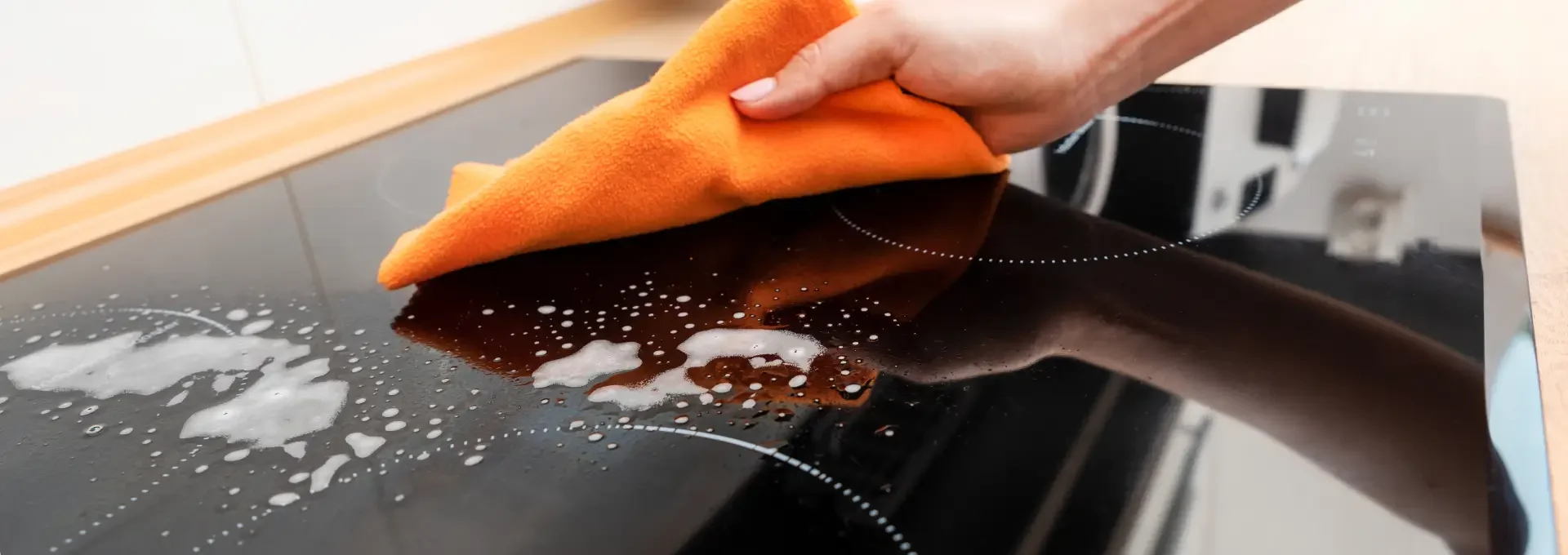
Cleaning the hob: Remove burnt-on residue
Last updated:
You’re cooking your favorite dish, the pasta water is bubbling away, and—just as you turn around for a moment—it happens: the water boils over, leaving unsightly white marks on the glass-ceramic cooktop. Or worse: sauce splatters from the pan while you’re sautéing, burns on instantly, and leaves behind stubborn residue. We’ve all experienced moments like these. But questions often arise: How do you get rid of burnt-on food? Which home remedies actually work? And how can you prevent scratches or dull spots?
A glass-ceramic cooktop is not only a practical kitchen appliance suitable for a wide range of cooking methods but also a visual highlight in a modern kitchen. It is all the more frustrating, then, when discoloration, scratches, or unsightly marks appear on the smooth surface.
These cooktops are made of glass-ceramic, a material that is more delicate than conventional glass. Improper cleaning can damage the surface and shorten the appliance's lifespan. However, not all glass-ceramic cooktops are the same; depending on the technology and manufacturer, there are various types that differ in how they operate:
Classic glass-ceramic cooktop with radiant heating: This is the most common type. Heating coils located beneath the smooth glass-ceramic surface heat up to warm the cooking zone. They are durable but take a bit longer to heat up compared to modern alternatives.
Induction glass-ceramic cooktop: Induction cooktops also feature a glass-ceramic surface but operate using electromagnetic induction. This means that only the base of the pot heats up, while the rest of the cooktop remains cool. Induction cooktops are highly energy-efficient and heat food faster, though they require special cookware.
Halogen or high-speed glass-ceramic cooktop: This variant uses halogen lamps or special high-performance heating elements positioned beneath the glass-ceramic surface. They heat up even faster than conventional radiant cooktops but are not as energy-efficient as induction hobs.
Modern hybrid glass-ceramic cooktops: Some models combine classic radiant heating with induction or other technologies to offer a flexible cooking experience.
Despite these technical differences, all glass-ceramic cooktops feature a delicate surface that requires special care to prevent scratches, discoloration, or burnt-on residue. Therefore, always avoid using abrasive or harsh cleaning agents. Ideally, use specially formulated glass-ceramic cleaners—such as those from Dr. Beckmann—or simple household remedies that do not contain abrasive ingredients.
In this guide, we provide proven methods for exactly this purpose—ranging from classic household remedies to Dr. Beckmann cleaning products—ensuring you can clean and maintain your glass-ceramic cooktop effortlessly. We also offer valuable expert tips on preventing scratches, removing metallic discoloration, and keeping your cooktop streak-free in the long run. This ensures your cooktop stays not only clean but also beautifully radiant for years to come!
How to properly clean a glass-ceramic cooktop without scratching it
Before we look at the various methods for cleaning glass-ceramic cooktops, it is important to keep a few basic tips in mind. After all, proper care starts while you are cooking:
- Cleaning after cooking: The simplest rule is to wait until the cooktop has cooled down after cooking. High-temperature cooking can cause grease splatters and liquids to spray, leading to heavy soiling. However, do not leave the cooktop dirty for unnecessarily long periods, as grime becomes harder to remove over time.
- Use suitable cleaning products: Use specially formulated glass-ceramic cleaners—such as those from Dr. Beckmann (LINK)—or mild, pH-neutral cleaning agents. This helps protect the delicate glass and prevents harsh chemicals from damaging the surface. Experts advise against using abrasive cleaners or steel wool, as these can cause scratches.
- Water and a cloth: For daily cleaning, a damp cloth with a little dish soap or a gentle all-purpose cleaner is often sufficient. However, for a thorough clean or to tackle stubborn stains, you should use specialized glass-ceramic cleaners or household remedies.
To keep your cooktop surface in pristine condition over the long term, the following care tips are particularly important:
- Avoid abrasive materials: Even though steel wool and scouring creams might seem tempting, you should avoid using them. They can scratch the glass-ceramic surface and make it look unsightly. Instead, use special glass-ceramic scrapers or mild, specially formulated cooktop cleaners from Dr. Beckmann.
- Protect your cooktop from scratches: Always place pots and pans carefully onto the glass-ceramic surface. Small scratches can easily occur, especially with cookware that has a rough underside (e.g., uneven pans).
- Wipe down regularly: To prevent grease and water stains, wipe your cooktop with a damp cloth after every use. Ideally, use a mild all-purpose cleaner or a special shine-enhancing spray, such as the Glass-Ceramic & Stainless Steel Shine Cleaner.
- Clean up spills immediately: If something boils over or spills, wipe it up right away. Once liquids like milk or sugar dry onto the surface, they become much harder to remove and can cause long-term damage to the cooktop.
- Use a scraper for stubborn stains: For burnt-on stains, a special glass-ceramic scraper is useful for loosening dirt without scratching the glass. Scrape gently at a shallow angle to clean the surface without leaving scratches.
Dr. Beckmann for a clean and shiny ceramic cooktop
It may have happened to you while cooking: failing to remove a pot or pan from the ceramic cooktop in time, resulting in severe burnt-on residue. This often leads to difficult, stubborn stains that cannot be easily removed with standard cleaning methods. Here’s how to handle it:
Preparation: Before you start cleaning your ceramic cooktop, there are a few important steps to follow to ensure the best results and protect the surface. First, allow the glass-ceramic cooktop to cool down completely to prevent burns or heat-related damage. Once cool, use a dry cloth or soft brush to remove coarse residue, such as grease splatters or food scraps. This makes cleaning more efficient and prevents the residue from sticking to the surface during the subsequent cleaning process. Use a microfiber cloth rather than paper towels, as the latter can often leave behind lint or fibers.
Cleaning and Shine: For light soiling and a fresh shine, we recommend Dr. Beckmann Glass-Ceramic & Stainless Steel Cleaner. It is specially formulated to gently remove dirt while providing a long-lasting shine. Thanks to its special formula, it reliably removes grease, water spots, and light encrustations without damaging the delicate glass-ceramic surface. Simply spray a small amount onto the cool cooktop surface and let it sit for a moment. Then, clean the area with a soft cloth or sponge and wipe it down with a damp cloth. The result: a streak-free, shiny cooktop.
Cleaning with Protection: If you want to not only clean your ceramic cooktop but also protect it against future soiling, Dr. The Dr. Beckmann Glass-Ceramic Cleaning Stone is the perfect solution. This cleaner effortlessly removes stubborn grime—such as burnt-on food, limescale deposits, and grease residue—while simultaneously leaving behind a protective layer. This protective coating makes future cleaning easier, as new residues do not adhere as strongly. To use, simply dampen the included sponge slightly and rub it over the cleaning stone a few times. Use the black side of the sponge to clean the cooktop. Use the red side to remove product residue and wipe the surface clean with a damp cloth. The cooktop remains not only clean but also protected against new soiling for longer.
Heavy Soiling: Standard cleaning is not always sufficient for particularly stubborn dirt, especially when burnt-on food or stubborn grease stains have set in. Dr. Beckmann Intensive Glass-Ceramic & Stainless Steel Cleaner is designed specifically for such cases. Its powerful formula dissolves even deeply burnt-on deposits without damaging the glass-ceramic surface. Apply a small amount to the affected areas and let it sit for a few minutes. Clean the area and wipe it down with a soft, damp cloth. Finally, simply buff the cooktop dry with a clean cloth. For particularly stubborn stains, the process can be repeated or combined with the use of a special glass-ceramic scraper.
For an all-around clean kitchen, we recommend Dr. Beckmann Kitchen Grease Cleaner. It removes stubborn grease residue from countertops, range hoods, tiles, and kitchen appliances—making it ideal for keeping the entire kitchen hygienically clean. Especially practical: since grease splatters also accumulate on the glass-ceramic cooktop, this cleaner serves as an excellent pre-treatment for a thorough cleaning. Simply spray the product onto the soiled surfaces, leave it to work briefly, and wipe it off with a damp cloth. For particularly stubborn dirt, the contact time can be extended.
Our tips for the best household remedies for cleaning glass-ceramic cooktops
After cooking, you are often left with more than just a delicious aroma in the kitchen; stubborn stains on the glass-ceramic cooktop are common too. Burnt-on sauce, boiled-over water, or grease splatters can quickly make the cooktop look unsightly. The first instinct is to reach for a commercial cleaner, but sometimes you don't have one on hand. Fortunately, there are many household remedies that work just as well. Ingredients like baking powder, vinegar, lemon, and baking soda are found in almost every kitchen; they are gentle on the surface yet highly effective against grease and burnt-on residue. They reliably remove dirt without scratching the glass-ceramic. So, if you are looking for a quick, inexpensive solution, household remedies are often the best choice.
Baking powder is considered a classic household remedy. It acts as a mild abrasive that loosens even burnt-on grease and other residues without scratching the cooktop. To use it, sprinkle a generous amount of baking powder over the soiled area and drizzle on a little water to create a paste. Let the paste sit for about 10 to 15 minutes to allow it to break down the grease and residue. Then, wipe the cooktop with a damp cloth and buff it dry with a soft cloth. If particularly stubborn stains remain, repeat the process, adding more baking powder if necessary.
Like baking powder, baking soda has grease-dissolving properties and is excellent for cleaning cooktops. Baking soda not only tackles grease but also neutralizes unpleasant odors caused by grease buildup. Sprinkle a small amount of baking soda directly onto the affected areas of your cooktop and add a few drops of water to form a paste. Let this mixture sit for about 10 minutes. The baking soda will soften the grease residue, allowing you to wipe it away effortlessly with a soft cloth. For an even deeper clean, you can add vinegar to the baking soda; the resulting fizzing reaction helps loosen particularly stubborn deposits.
Vinegar is another highly effective household remedy for cleaning glass-ceramic cooktops, especially when dealing with greasy residue and limescale deposits. Its advantage lies in its ability to dissolve grease while simultaneously ensuring a shiny, streak-free finish. Mix vinegar and water in a 1:1 ratio and pour the mixture into a spray bottle. Spray the cooktop generously with the solution and let it sit for about 5 to 10 minutes. Afterward, wipe the cooktop with a soft cloth and dry it thoroughly. This method removes not only grease but also unsightly limescale stains caused by water boiling over.
Lemons are known for their natural acidity, which is excellent for tackling greasy residue. The acid in lemon juice not only breaks down grease but also ensures a shiny, streak-free finish. Take a fresh lemon, cut it in half, and rub the cut surfaces over the soiled areas of the glass-ceramic cooktop. The juice will dissolve the grease and leave behind a fresh scent. After treating the surface, wipe the cooktop with a damp cloth and dry it with a clean, dry cloth. For a particularly thorough clean, you can also combine lemon juice with baking soda. Sprinkle some baking soda onto the cooktop, drizzle lemon juice over it, and let the fizzy mixture sit for a few minutes to loosen stubborn stains.
Shaving foam is useful not only in the bathroom but can also help in the kitchen. The foam contains mild cleaning agents that remove even stubborn grease stains and burnt-on residue without damaging the glass surface. Spray a small amount of shaving foam onto the soiled areas and let it sit for about 5 to 10 minutes. Then, wipe off the foam with a damp cloth and dry the ceramic cooktop thoroughly. This method is particularly useful when you want a quick and effective clean after cooking.
For the daily cleaning of a ceramic cooktop, a mixture of water and dish soap is a particularly gentle and straightforward method. Dish soap dissolves grease and light dirt, making it ideal for regular cleaning after cooking. Simply add a small squirt of dish soap to warm water and mix well. Wipe the cooktop with a soft cloth or sponge to remove grease and residue. Afterward, dry the cooktop with a dry cloth to prevent water spots. This method is excellent for quick everyday cleaning when the cooktop is only lightly soiled after cooking.
A combination of baking soda and lemon juice is particularly effective against burnt-on residue and heavy soiling. The baking soda acts as a mild abrasive, while the citric acid dissolves grease and leaves the cooktop surface shining and streak-free. Mix baking soda with lemon juice to create a thick paste and apply it to the affected areas. Let the mixture sit for about 10 to 15 minutes to allow it to loosen the dirt. Then, wipe everything off with a damp cloth and dry the cooktop thoroughly. This method is particularly useful when dealing with stubborn, burnt-on residues, such as those caused by sugary water or milk boiling over.
Cleaning and caring for a glass-ceramic cooktop – our verdict
Burnt-on food residue, grease splatters, and limescale stains can be removed effortlessly with the right care and appropriate cleaning methods. While household remedies like baking powder, vinegar, or baking soda offer a natural and cost-effective alternative, they are not always the best choice for particularly stubborn grime.
For cleaning that is both effective and gentle, using specially formulated glass-ceramic cooktop cleaners is recommended. Dr. Beckmann products stand out in this regard, having been specifically developed to care for delicate glass-ceramic surfaces. The products allow you to effortlessly remove burnt-on residue and leave behind a streak-free, gleaming surface.
In addition, regular care and careful handling help prevent scratches and discoloration. By wiping down your cooktop after every use, immediately cleaning up spills, and avoiding abrasive cleaners, you can enjoy a pristine cooking surface for years to come. With the right methods and high-quality cleaning products, your cooktop will remain not only clean but also lastingly beautiful!