How to Clean a Shower Properly
Last updated:
A clean shower makes the whole bathroom feel fresher, but regular exposure to water, soap and personal care products can quickly leave visible marks and deposits behind. Limescale, soap residue and dirt can build up on shower screens, tiles, fittings and other surfaces if they are not cleaned regularly.
Knowing how to clean your shower properly can help prevent stubborn build-up and make regular bathroom cleaning much easier. The right cleaning method depends on the surface and the type of residue you want to remove.
5 Key Facts About Cleaning the Shower
- Regular cleaning helps prevent limescale, soap residue and dirt from building up.
- Shower screens, fittings, tiles and grout require different cleaning methods.
- Drying wet surfaces after showering can help reduce water marks and limescale.
- Acidic or abrasive cleaners are not suitable for every shower surface.
- Always choose cleaning products that are suitable for the specific material.
Where Can Dirt and Deposits Occur in the Shower?
Water, soap and personal care products come into contact with many different surfaces during showering. As a result, deposits can occur on shower screens, doors, tiles, grout, taps, shower heads, fittings and shower trays.
Glass surfaces may develop cloudy water marks or limescale, while soap and body care products can leave residue on tiles and shower trays. Fittings and shower heads are particularly susceptible to limescale because they regularly come into direct contact with water.
Corners, joints and grout lines can also collect dirt and moisture. Regular cleaning and drying therefore help keep the entire shower area looking clean and well cared for.
Which Dr. Beckmann Products Help Clean the Shower?
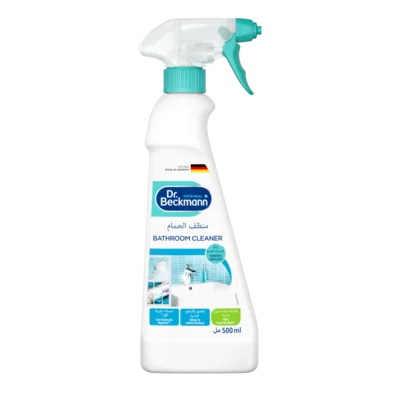
Suitable Dr. Beckmann bathroom cleaning products can help remove limescale, soap residue and everyday dirt from different areas of the shower.
Choose a product that is suitable for the affected surface and type of residue, and always follow the instructions on the packaging before use.
How to Clean Different Shower Surfaces
Water marks, limescale and soap residue can make a glass shower screen look cloudy over time.
Apply a cleaner suitable for shower glass according to the product instructions. Allow it to work for the recommended time before wiping or rinsing it away. Dry the glass with a soft cloth or squeegee to help prevent new water marks.
Avoid abrasive sponges or cleaners that may scratch the glass or damage coated surfaces.
Shower tiles are regularly exposed to water, soap and personal care products. Use a suitable bathroom cleaner and a soft sponge or cloth to loosen deposits and everyday dirt.
Rinse thoroughly with clean water after cleaning and dry the surface where practical. Always check the tile material before using acidic products, as natural stone and other acid-sensitive surfaces require special care.
Grout lines can collect dirt and residue, particularly in areas that remain damp for longer periods.
Use a cleaning product suitable for the type of grout and apply it according to the instructions. Clean gently rather than aggressively scrubbing the surface, and rinse thoroughly afterwards.
Keeping grout as dry as possible between showers can help reduce the build-up of dirt and moisture.
Limescale is particularly common around shower heads, taps and other fittings.
Use a suitable limescale remover on compatible surfaces and allow it to work according to the product instructions. Rinse thoroughly and wipe the surface dry afterwards.
Be especially careful with coated, plated or delicate finishes, as acidic cleaners may not be suitable for them.
Soap, body care products and everyday dirt can collect on the shower tray.
Clean the surface regularly with a product suitable for the material and a soft cloth or sponge. Rinse away any cleaning residue thoroughly and dry the surface afterwards.
Avoid abrasive tools, particularly on sensitive acrylic or coated surfaces, as they may cause scratches or dull the finish.
How to Keep the Shower Clean
A few simple habits can help keep your shower clean for longer. Use a squeegee or soft cloth to remove water from shower screens and tiles after use, and wipe fittings dry where practical. This can help reduce water marks and slow down limescale build-up.
Remove soap and personal care product residue regularly before it develops into stubborn deposits. Good ventilation also helps shower surfaces dry more quickly and reduces the amount of time that moisture remains in the bathroom.
Frequent light cleaning is generally easier than removing several layers of accumulated dirt and deposits later.
5 Household Remedies and Tips for Cleaning the Shower
Some common household ingredients can help with light deposits and everyday shower cleaning. However, household remedies are not suitable for every material. Always check the manufacturer's care instructions first, test sensitive surfaces in an inconspicuous area and never mix household remedies with other cleaning products.
Diluted white vinegar can help loosen light limescale and water marks on some acid-resistant surfaces.
Apply it sparingly and rinse thoroughly with clean water afterwards. Do not use vinegar on marble, calcareous natural stone or other acid-sensitive surfaces.
Citric acid can help tackle light mineral deposits on suitable acid-resistant surfaces.
Always dilute and use it according to the instructions of the citric acid product. Check material compatibility before application and rinse the surface thoroughly afterwards.
Lemon juice may help with light water marks and limescale on suitable surfaces due to its natural acidity.
Use it sparingly and rinse thoroughly after cleaning. Like other acidic substances, lemon juice should not be used on acid-sensitive materials.
Warm water and a small amount of washing-up liquid can be useful for removing light soap residue and everyday dirt from suitable water-resistant surfaces.
Wipe with a soft cloth or sponge, rinse well with clean water and dry afterwards. Washing-up liquid is useful for regular maintenance but is not an effective solution for heavy limescale.
One of the simplest ways to reduce visible deposits is to remove water before it dries.
Use a shower squeegee on glass and suitable tiled surfaces after showering. Regular drying can help prevent water marks and slow down limescale build-up.
Brief summary
Regular shower cleaning helps prevent limescale, soap residue and everyday dirt from developing into stubborn build-up. Shower glass, tiles, grout, fittings and shower trays may require different cleaning methods, so always consider the material before choosing a product. Drying wet surfaces after use can help reduce water marks and mineral deposits. With frequent light cleaning and the right products, your shower can stay clean and well cared for.
FAQ
There is no single schedule that works for every household, as cleaning frequency depends on how often the shower is used, water hardness and how quickly deposits appear. Remove visible soap residue and water marks regularly and carry out a more thorough clean before deposits become stubborn.
Remove water from shower screens, tiles and fittings with a squeegee or soft cloth after use. Regular drying can reduce the amount of mineral-rich water left to evaporate and therefore help slow down visible limescale build-up.
Cloudiness on shower glass can be caused by limescale, water marks or soap residue. Use a cleaner suitable for the glass and the type of deposit, follow the recommended contact time, rinse thoroughly and dry the surface afterwards. Avoid abrasive cleaning tools that may scratch the glass.
Diluted white vinegar may help remove light limescale from some acid-resistant shower surfaces. However, it should not be used on marble, calcareous natural stone or other acid-sensitive materials. Always check the surface manufacturer's care instructions first.
Remove water from shower screens, tiles and fittings with a squeegee or soft cloth after use. Regular drying can reduce the amount of mineral-rich water left to evaporate and therefore help slow down visible limescale build-up.
Additional Dr. Beckmann recommendations
A clean shower is just one part of a fresh and well-cared-for bathroom. Discover more Dr. Beckmann cleaning solutions to make everyday household cleaning easier.