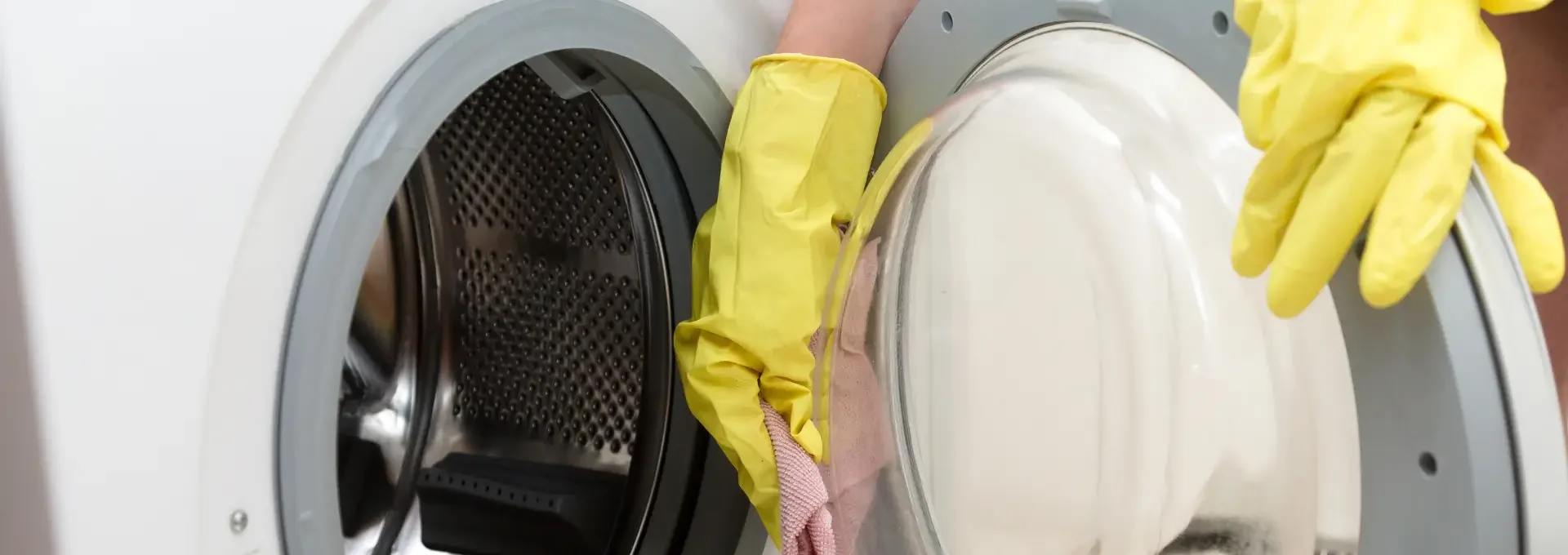
How to clean a washing machine with Dr. Beckmann
Last updated:
You open the washing machine door and notice a musty smell, or your freshly washed laundry no longer smells as fresh as expected. Over time, detergent residue, dirt and limescale can build up in the drum, detergent drawer, seals and other parts of the machine. Regular cleaning helps prevent stubborn deposits and unpleasant odours while keeping the appliance clean and well maintained. How often your washing machine needs cleaning depends on how frequently you use it, your washing habits and the hardness of your water.
What matters when cleaning a washing machine?
- Clean the washing machine regularly, depending on how often you use it and the level of build-up.
- Check the detergent drawer, door seal and drum for residue and clean them when needed.
- Check and clean the filter according to your washing machine manufacturer’s instructions.
- Descale the machine when needed, particularly in areas with hard water.
- Use the correct amount of detergent according to the detergent instructions, load size and local water hardness.
- Use only cleaning and descaling products suitable for washing machines.
- Always follow your appliance manufacturer’s cleaning and maintenance recommendations.
Why does my washing machine smell?
During everyday washing, detergent and fabric-care residue, dirt and minerals from the water can build up in different parts of the machine. Moisture can remain around the door seal, detergent drawer and other areas after a wash cycle.
Over time, this build-up can contribute to unpleasant odours and visible deposits. Regular cleaning of the drum, detergent drawer, door seal and filter, together with correct detergent dosing, helps keep the washing machine clean and well maintained.
Which products help to clean a washing machine?
Different types of build-up may require different cleaning solutions. Detergent residue, dirt, unpleasant odours and limescale can occur in different parts of a washing machine, so regular cleaning and descaling when needed are important parts of appliance care.
Discover the Dr. Beckmann washing machine cleaning solutions available in your country below. Always follow the product instructions and your appliance manufacturer’s care recommendations.
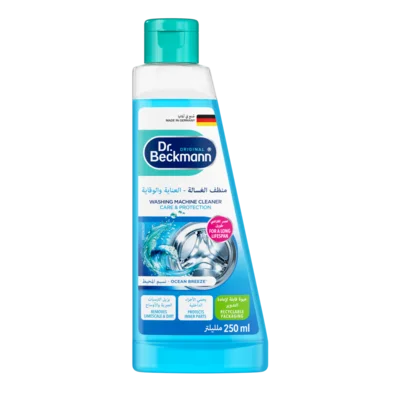
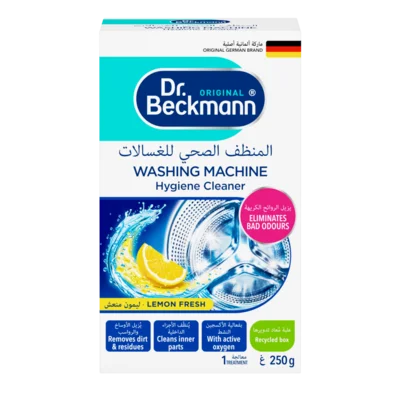
Cleaning your washing machine the right way
Detergent residue, dirt and other deposits can build up inside the drum over time. Clean the drum as needed using a product suitable for washing machines and follow the product and appliance manufacturer’s instructions. Make sure the machine is empty if required by the cleaner instructions.
Detergent and fabric-softener residue can collect in the dispenser drawer and its compartments. Remove the drawer if permitted by the appliance manufacturer and rinse it with warm water. Use a soft brush to loosen stubborn deposits, then clean the drawer compartment before reinstalling it.
Water, detergent residue and small particles can collect in and around the rubber door seal. Wipe the seal carefully with a soft, damp cloth, including the folds where residue can accumulate. Use only cleaning products suitable for the material and check the seal regularly for visible dirt or damage.
The washing machine filter can collect lint, fibres and small objects. Clean it according to your appliance manufacturer’s instructions. Before opening the filter, follow the recommended procedure for draining any remaining water and place a suitable container or towel underneath if necessary.
In areas with hard water, limescale can build up inside the washing machine over time. Descale the appliance when needed using a product suitable for washing machines and follow both the descaler instructions and your appliance manufacturer’s recommendations.
Can home remedies be used to clean a washing machine?
Some household remedies are commonly used for light cleaning, odour removal or limescale, but they may not be suitable for every washing machine or component. Acids in particular can affect certain materials and seals. Always check your appliance manufacturer’s care instructions before using a home remedy.
Bicarbonate of soda is sometimes used to help tackle light deposits and unpleasant odours. If permitted by your washing machine manufacturer, use it carefully and avoid abrasive pastes on sensitive surfaces.
Citric acid is commonly used to tackle limescale. However, concentration, temperature and material compatibility are important. Only use it if permitted by your appliance manufacturer and follow the instructions on the citric-acid product rather than using an improvised dosage.
Vinegar is sometimes recommended for limescale and deposits, but its acidity may affect seals and other sensitive materials. Only use vinegar if permitted by your washing machine manufacturer.
For stubborn deposits or significant limescale build-up, a purpose-made washing machine cleaner or machine descaler is usually the more targeted option.
How to help keep your washing machine clean
Remove laundry promptly after the wash cycle and check the drum, door seal and detergent drawer regularly for moisture or residue. Use the correct amount of detergent for your load size and local water hardness, and avoid overloading the machine.
Follow your washing machine manufacturer’s recommendations for routine care, including guidance on cleaning programmes, the filter and ventilation after use.
Brief summary
Regular cleaning helps prevent detergent residue, dirt, limescale and unpleasant odours from building up inside your washing machine. Check the drum, detergent drawer, door seal and filter regularly, and descale the appliance when needed according to local water hardness and the manufacturer’s recommendations.
Use only cleaners and descalers suitable for washing machines and follow the product instructions carefully. Selected household remedies may be useful for light cleaning if permitted by the appliance manufacturer. For stubborn deposits or limescale, purpose-made washing machine cleaners and descalers are the more targeted choice.
Whatever cleaning method you choose, always follow your washing machine manufacturer’s cleaning and maintenance recommendations.
FAQ: Cleaning washing machines
Clean your washing machine regularly according to how often you use it and how much residue has built up. Check the drum, detergent drawer, door seal and filter periodically and descale the machine when necessary, particularly in hard-water areas. Always follow the appliance manufacturer’s recommended cleaning intervals.
Unpleasant odours can develop when detergent residue, dirt and moisture collect inside the washing machine. Check and clean areas such as the drum, detergent drawer, door seal and filter, and use a suitable washing machine cleaner if needed.
Remove the detergent drawer if permitted by the appliance manufacturer and rinse away detergent and fabric-softener residue with warm water. Use a soft brush for stubborn deposits and clean the drawer compartment before reinstalling it.
Wipe the seal carefully with a soft, damp cloth and clean inside the folds where water, detergent residue and small particles can collect. Use only products suitable for the material and follow the appliance manufacturer’s recommendations.
Follow your appliance manufacturer’s instructions for accessing and cleaning the filter. Be prepared for residual water when opening it. Remove lint, fibres and small objects, rinse the filter if recommended and reinstall it correctly before using the machine.
Discover more laundry care solutions
A well-cared-for washing machine is only part of a good laundry routine. Dr. Beckmann offers practical solutions for laundry care, stain removal and other everyday laundry challenges. Discover more products available in your country.