How to clean a fridge with Dr. Beckmann
Last updated:
You open the fridge and notice an unpleasant smell, sticky residue on a shelf or food that has leaked into a drawer. Spills, crumbs and food residue can quickly build up inside a refrigerator, especially on shelves, in drawers, around seals and in hard-to-reach corners.
Regular cleaning helps remove dirt and unpleasant odours and keeps the interior clean and well cared for. How often your fridge needs cleaning depends on how frequently it is used, what you store in it and whether food or liquids have spilled.
What matters when cleaning a fridge?
- Remove spills and food residue as soon as possible to prevent sticky or dried-on deposits.
- Check shelves, drawers and door compartments regularly for crumbs, spills and spoiled food.
- Use only cleaning products suitable for refrigerator interiors and food-storage areas.
- Pay particular attention to seals, edges and corners, where residue can easily collect.
- Remove shelves and drawers for easier cleaning if permitted by the appliance manufacturer.
- Always follow your refrigerator manufacturer’s cleaning and maintenance recommendations.
How do dirt and unpleasant odours develop in the fridge?
Food spills, crumbs, condensation and leaking containers can leave residue on shelves, drawers and other surfaces. Unpleasant odours can also develop when food is stored for too long, packaging leaks or residue remains in hard-to-reach areas.
Regularly checking stored food, wiping up spills and cleaning the interior when needed helps prevent stubborn deposits and unwanted smells.
Which products help to clean a fridge?
Different types of soiling may require different cleaning solutions. Food residue, grease, sticky spills and unpleasant odours can occur on different surfaces throughout the refrigerator, so regular cleaning is an important part of appliance care.
Discover the Dr. Beckmann refrigerator and household cleaning solutions available in your country below. Always follow the product instructions and your refrigerator manufacturer’s care recommendations.
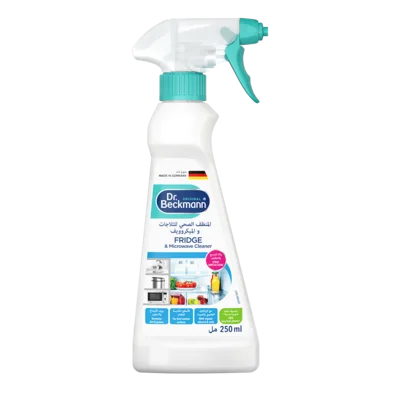
Cleaning your fridge the right way
Before cleaning, check the appliance manufacturer’s instructions and remove food from the areas you want to clean. Depending on the appliance and how thoroughly you are cleaning it, the refrigerator may need to be switched off.
Keep perishable food appropriately chilled while it is outside the refrigerator.
Shelves and drawers can collect crumbs, sticky spills and food residue over time.
Remove them if permitted by the appliance manufacturer and clean them with a soft cloth or non-scratch sponge using a suitable cleaning product. Pay particular attention to corners and grooves where liquids and crumbs can collect.
Wipe away any remaining cleaning product and dry the parts thoroughly before putting them back into the refrigerator.
Tip: Allow cold glass shelves to adjust to a suitable temperature before cleaning them with warmer water to avoid sudden temperature changes.
Remove loose crumbs and food residue before wiping the interior surfaces. Use a soft, damp cloth or non-scratch sponge and a cleaner suitable for refrigerator interiors.
Work from the upper areas down towards the bottom so that crumbs or liquid do not fall onto surfaces you have already cleaned. Pay particular attention to corners, shelf supports and other areas where residue can accumulate.
Wipe treated surfaces thoroughly as required by the cleaning product instructions and dry the interior before returning food.
Food residue and moisture can collect in and around the refrigerator door seals, particularly in folds and corners.
Wipe the seals carefully with a soft, damp cloth. For stubborn residue, use only a cleaner suitable for the material and avoid sharp or abrasive cleaning tools that could damage the seal.
Check the seals for visible dirt or damage while cleaning and follow the appliance manufacturer’s recommendations for their care.
Door compartments often collect sticky residue from bottles, jars and packaging. Remove loose items and, where possible, take out the compartments according to the appliance instructions.
Clean them with a soft cloth or non-scratch sponge and a suitable cleaner, then wipe thoroughly and dry before putting them back.
Fresh spills are usually easier to remove than dried-on residue, so wipe them up as soon as practical.
For stubborn deposits, allow a suitable refrigerator cleaner to work according to the product instructions rather than scrubbing aggressively. Avoid steel wool, abrasive scouring products and sharp tools that could scratch interior surfaces.
How to help keep your fridge clean
A few simple habits can help prevent dirt and unpleasant odours from building up:
- Wipe away spills before they dry.
- Remove crumbs and loose food residue regularly.
- Keep food in suitable containers and make sure liquids are securely closed.
- Check stored food regularly and remove anything that is spoiled or no longer needed.
- Clean sticky bottles, jars or containers before putting them back.
- Check drawers, door compartments and seals for hidden residue.
- Avoid overfilling the refrigerator if this prevents proper storage or blocks areas that should remain unobstructed.
Always follow the appliance manufacturer’s recommendations for food storage, airflow and appliance care.
Can home remedies be used to clean a fridge?
Some simple household solutions are commonly used for light cleaning or odour removal. However, not every substance is suitable for every refrigerator surface or material. Always check the appliance manufacturer’s care instructions before using a home remedy.
Bicarbonate of soda is sometimes used to help tackle light residue and unwanted odours. If permitted by the appliance manufacturer, dissolve a small amount in water and use the solution with a soft cloth.
Avoid using dry bicarbonate of soda or abrasive pastes on surfaces that could scratch, and wipe the treated areas thoroughly afterwards.
Diluted vinegar is sometimes used for household cleaning, but its acidity means that it may not be suitable for all refrigerator surfaces, seals or other materials.
Only use vinegar if permitted by the appliance manufacturer and avoid applying it to materials that may be sensitive to acids.
Lemon is sometimes used to tackle light odours or residue, but lemon juice also contains acid and may not be suitable for every refrigerator surface.
If the manufacturer permits its use, apply it carefully and wipe the surface thoroughly with clean water afterwards.
For stubborn food residue, sticky deposits or persistent odours, a purpose-made refrigerator cleaner is usually the more targeted option.
Brief summary
Regular cleaning helps prevent food residue, sticky spills and unpleasant odours from building up inside your refrigerator. Wipe away fresh spills promptly and check shelves, drawers, door compartments and seals regularly for dirt or residue.
Use only cleaning products suitable for refrigerator interiors and the relevant surface materials. Selected household remedies may be useful for light cleaning if permitted by the appliance manufacturer. For stubborn residue or persistent odours, a purpose-made refrigerator cleaner is the more targeted choice.
Whatever cleaning method you choose, always follow the product instructions and your refrigerator manufacturer’s cleaning and maintenance recommendations.
FAQ: Cleaning Refrigerators
Clean your refrigerator whenever spills, crumbs, food residue or unpleasant odours build up. Check shelves, drawers and door compartments regularly and wipe up fresh spills as soon as practical. A more thorough clean can be carried out when needed according to how intensively the refrigerator is used and the appliance manufacturer’s recommendations.
Remove food and loose residue before cleaning the interior with a soft cloth or non-scratch sponge and a cleaner suitable for refrigerator interiors. Clean shelves, drawers, corners and other surfaces where residue may collect. Wipe treated surfaces thoroughly and dry them before returning food to the refrigerator.
First check for spoiled food, leaking packaging and hidden spills. Remove the source of the smell and clean affected shelves, drawers, seals and interior surfaces thoroughly. If the odour remains, use a cleaning product suitable for refrigerator interiors and follow the product and appliance manufacturer’s instructions.
Wipe the seals carefully with a soft, damp cloth, paying particular attention to folds and corners where food residue and moisture may collect. Avoid sharp or abrasive tools that could damage the material and use only cleaning products recommended for the seal.
Many refrigerators have removable shelves, drawers or door compartments, which can make thorough cleaning easier. However, the construction varies by model. Check your refrigerator manual before removing parts and follow the manufacturer’s cleaning instructions, particularly for glass shelves and delicate components.
Discover more household cleaning solutions
A clean home goes beyond the fridge. Dr. Beckmann offers practical cleaning solutions for different surfaces, appliances and everyday cleaning challenges around the home. Discover more products available in your country and find the right solution for your cleaning needs.