How to Wash Black Clothes and Keep Their Colour
Last updated:
You reach for your favourite black jumper or dark jeans on a Friday evening, ready for the weekend, only to find that the rich black colour has faded to a washed-out grey. Frequent washing, friction in the washing machine and using the wrong detergent can all cause dark clothes to fade over time.
With the right washing method, gentle temperatures and proper care, you can wash black clothes without losing their colour intensity. Find out how to sort, wash, dry and care for dark clothes to help them stay looking their best for longer.
At a Glance: How to keep black clothes looking deep black for longer
- Sort: Wash black clothes only with similarly dark colours and turn garments inside out.
- Wash: Use a detergent for dark clothes or a colour detergent. Wash at 30°C on an easy-care or delicate cycle with a spin speed of no more than 800 to 1,000rpm.
- Dry: Ideally, air-dry black clothes in the shade and keep them out of direct sunlight.
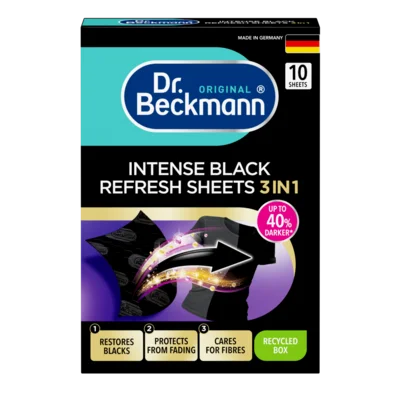
- Refresh: Restore faded black clothes with colour renewal sheets during a normal wash cycle.
The Right Preparation: Why Black Clothes Need Special Care
Before washing black clothes, one of the most important steps for maintaining rich, dark colours is sorting your laundry carefully by colour and fabric.
Black garments can release excess dye during washing. Ideally, you should therefore wash black clothes with other black items. But what about similar colours? Dark blue, dark grey or deep forest green can usually be washed together with black clothes, provided you use a detergent designed for dark colours.
Light-coloured or white laundry, however, should not be included in the same load. Dark dye released into the wash water can transfer to lighter fabrics and leave them looking dull or grey. If you cannot avoid washing a mixed load, colour catcher sheets can be particularly useful. They trap loose dye particles in the wash water before they can settle on other fabrics.
The type of fabric also plays an important role when washing black clothes. Rougher fabrics can rub against more delicate materials inside the drum. This mechanical friction can roughen the fibres and change the way they reflect light, making garments appear grey or faded even when much of the original dye is still present in the fabric.
To help protect the outer surface, turn each garment inside out before placing it in the washing machine. This helps reduce friction on the visible side of the fabric and keeps black clothes looking their best for longer. You should also close all zips, buttons and hook-and-loop fasteners to prevent them from catching on or pulling threads from other garments.
Step-by-Step Guide: How to Wash Black Clothes Properly
When everyday life gets busy, doing the laundry needs to be quick and efficient. But saving time shouldn’t come at the expense of your clothes. But saving time should not come at the expense of your clothes. With these four steps, you can wash black clothes gently while helping to preserve their deep black colour.
Step 1. Load the Washing Machine Correctly
Never overload the washing machine. As a general rule, there should always be about a hand’s width of space between the laundry and the top of the drum.
An overloaded washing machine significantly increases friction between garments. It can also prevent the detergent from dissolving and distributing properly, which may leave unwanted white streaks or residue on black clothes.
Step 2. Choose the Right Detergent
Avoid using heavy-duty detergent when washing black clothes. These detergents often contain optical brighteners and bleaching agents that can cause dark colours to lose their intensity.
Instead, choose a liquid detergent specifically designed for dark clothes or a colour detergent. Liquid detergents have an important advantage when washing dark fabrics: they are less likely to leave undissolved powder residue that can appear as light streaks on black clothing.
Step 3. Choose the Ideal Washing Temperature
One of the most common questions is: Should you wash dark clothes at 30°C or 40°C?
For everyday washing, 30°C is generally sufficient for black clothes. Lower temperatures are gentler on the colour pigments and can also help reduce the risk of garments shrinking. Using lower temperatures and energy-efficient washing programmes can also help reduce energy consumption, making them a responsible choice for your home and the environment.
Can you wash black clothes at 60°C? Only in exceptional cases, such as heavily soiled or sweaty dark sports underwear or towels, and only if the care label specifically allows it. Washing at 60°C can cause dark colours to fade significantly faster.
Step 4. Choose the Right Wash Cycle and Spin Speed
Black clothes are best washed using an easy-care or delicate cycle. These programmes handle textiles more gently and help reduce mechanical stress on the fibres.
Can you spin black clothes? Yes, but it is best to keep the spin speed relatively low. Set the washing machine to a maximum of around 800 to 1,000 rpm. Higher spin speeds can press the fibres more firmly against the drum and increase mechanical stress, which can contribute to the fabric looking worn or faded over time.
Which Dr. Beckmann Product Helps Keep Black Clothes Looking Their Best?
Dr. Beckmann offers targeted solutions to help care for dark fabrics and refresh faded black clothes. Discover suitable products for keeping your favourite black garments looking rich and well cared for.
Common Problems to Avoid: White Streaks, Stains and Unpleasant Odours
Even when you take good care of your clothes, problems can occasionally occur. Knowing what causes them makes it much easier to prevent or resolve them.
Why Do Dark Clothes Sometimes Smell Unpleasant After Washing?
It’s a familiar problem: you take your damp laundry out of the washing machine and instead of smelling clean and fresh, it has an unpleasant musty odour. One possible reason is the low washing temperatures commonly used for black clothes. Low-temperature wash cycles may not always remove all residues that can contribute to unpleasant odours. Over time, detergent residue, dirt and other build-up can also accumulate inside the washing machine and affect subsequent loads.
Regular washing machine cleaning can help prevent this. Around every two to three months, use a dose of Dr. Beckmann Washing Machine Cleaner and run an empty wash cycle at a minimum of 60°C. This helps remove built-up residues and keeps your washing machine fresh and ready for your next load of dark laundry.
How Can You Prevent White Streaks on Dark Clothes?
If you notice white streaks or marks on your black trousers after washing, these are often caused by undissolved detergent residue or mineral deposits from hard water.
To help prevent them, always measure your detergent according to the manufacturer’s instructions and the hardness of your water. More detergent does not mean better cleaning. Using too much can make it difficult for the rinse cycle to remove all detergent residue.
If white streaks do appear, wash the affected garment again on a short cycle using water only.
How to Treat Stains on Black Clothes
A coffee stain on a black blouse or an oil splash on dark trousers can be frustrating. One of the biggest mistakes is vigorously rubbing the stain with water and a cloth. Excessive rubbing can affect the fibres and colour at the affected area, potentially leaving behind a lighter, faded patch that may be even more noticeable than the original stain.
To remove stains from black clothes while protecting the fabric and colour, follow Dr. Beckmann’s stain removal tips. Different types of stains require different treatments, so choosing a method that is suitable for the specific stain and fabric is essential.
Refresh the Colour: The Secret to Long-Lasting Black
Even with careful washing, black cotton can gradually fade over time simply through regular wear and washing. If your favourite shirt has lost its deep black colour, you can use a specially designed colour refresher as part of your normal wash cycle.
Simply add 1 Dr. Beckmann Black Colour Renewal Sheet to the drum the next time you wash black clothes. Add your usual detergent and start the selected wash programme. The sheets contain real textile dye, which is evenly distributed throughout the fibres during the wash to restore faded fabrics to a rich black. At the same time, special enzymes help smooth roughened fibres, leaving clothes looking well cared for again.
After the wash cycle, simply dispose of the used sheet with your household waste.
How to Dry Black Clothes: The Final Step for the Best Results
Washing black clothes correctly is only part of the process. How you dry them can also make a significant difference to how well they retain their colour. So, what is the best way to dry black clothes?
The gentlest method is to air-dry black clothes. Remove damp garments from the washing machine promptly after the cycle has finished to help prevent unpleasant odours from developing inside the closed drum.
Make sure dark clothes are not left to dry in direct sunlight. UV radiation from the sun can have a bleaching effect and cause dark colours to fade more quickly. Instead, choose a shady, well-ventilated place and leave the garments turned inside out while they dry.
For many black garments, tumble drying is best avoided because the heat and friction inside the dryer can contribute to fading and pilling, the formation of small balls of fibre on the fabric surface.
If you do need to use a tumble dryer, always check the care label first. If tumble drying is permitted, choose a gentle programme at a low temperature and remove the clothes while they are still slightly damp.
Conclusion: Washing Black Clothes Made Easy
With these practical tips and targeted solutions from Dr. Beckmann, caring for your black clothes becomes simple and effective. This helps your favourite dark jeans, jumpers and other black garments retain their rich colour and keep looking their best for longer.
Frequently Asked Questions About Washing Black Clothes
To make caring for dark clothes as easy as possible, we’ve answered the most important questions about washing black clothes below.
Ideally, wash black clothes at 30°C on an easy-care or delicate cycle. Set the spin speed to a maximum of 800 to 1,000 rpm to reduce mechanical stress and friction on the fibres.
Never wash black clothes together with white or light-coloured laundry, such as pastels, light grey or yellow. Dark dyes can be released during washing and transfer to lighter fabrics, leaving them looking dull or grey.
Yes, in most cases. Similarly dark colours such as navy blue, charcoal grey and dark green can usually be washed together with black clothes. Use a colour detergent or a detergent suitable for dark and delicate fabrics.
It depends on the fabric of the other garments. Denim is relatively heavy and rough, so dark jeans are best washed with other robust, dark-coloured items.
Delicate black blouses or soft cotton tops may be affected by friction from denim. As a general rule, always turn jeans inside out before washing to help protect their colour and outer surface.
Use the correct amount of detergent to help prevent white residue or streaks, and close all zips before washing. If your black clothes fade over time, you can refresh their colour during a normal wash cycle using colour renewal sheets containing textile dye.
Additional Dr. Beckmann recommendations
Looking for more ways to care for your clothes and laundry? Discover additional Dr. Beckmann products available in your country to help protect colours, remove stains and keep your laundry looking its best.