How to Clean Your Oven
Last updated:
Cakes, pizza, biscuits – the oven is one of the most-used kitchen appliances, and unfortunately also one of the most demanding to clean. Burnt-on food residue and grease can produce unpleasant smoke and odours during heating and may affect the cleanliness of the oven and your cooking results. Regular cleaning keeps your kitchen hygienic, your baking results perfect and your oven working for longer – whether you use proven home remedies or specialized Dr. Beckmann cleaners.
What matters when cleaning an oven?
- Let the oven cool down completely before cleaning.
- Wipe away fresh splashes and residue after use to prevent stubborn build-up.
- Deep-clean the oven every 1–2 months, depending on use and soiling.
- Avoid sharp or abrasive tools that could damage oven surfaces.
- Always follow the cleaner instructions and your oven manufacturer’s care recommendations.
Why are burnt-on residues a problem?
Keeping your oven clean is about more than just appearance. Grease, food splashes and burnt-on residue can build up over time and may cause unpleasant odours or smoke when the oven heats up. Regular cleaning helps keep the appliance clean, well cared for and ready for your next meal.
Clean and pleasant cooking:
Food residue and grease can continue to burn when the oven is heated, causing unpleasant smells and smoke. Removing splashes and crumbs regularly helps keep the oven clean and prevents residue from becoming increasingly difficult to remove.
Better cooking results:
Heavy build-up on trays, racks or inside the oven can interfere with everyday use and may lead to unwanted smoke and odours during cooking. A clean oven provides the ideal conditions for baking, roasting and cooking your favourite dishes.
Easier cleaning:
Fresh splashes and grease are usually much easier to remove than residue that has been heated repeatedly. Wiping away light soiling regularly can save time and effort when it is time for a thorough clean.
Taking care of your oven:
Regular cleaning helps prevent stubborn build-up and keeps interior surfaces, racks and trays in good condition. Always follow the oven manufacturer's cleaning and care instructions, especially for coated surfaces and self-cleaning ovens.
Which product helps to solve the problem?
For stubborn grease and burnt-on food residues, Dr. Beckmann offers a specially developed oven cleaner that makes thorough cleaning easier. Always follow the product instructions and your oven manufacturer’s cleaning recommendations, as cleaning requirements may vary by appliance and surface.
Cleaning your oven the right way
Regular cleaning helps prevent grease, food splashes and burnt-on residue from building up. How often your oven needs cleaning depends on how frequently you use it and what you cook. As a general rule, wipe away fresh soiling soon after use and give the oven a thorough clean every one to two months, or whenever stubborn deposits become visible.
Before cleaning, switch off the oven and allow it to cool completely. Remove trays and racks so that you can reach the interior more easily.
Remove loose crumbs and food residue with a damp cloth, soft brush or suitable non-scratch tool. Avoid sharp or abrasive tools that could damage the oven surfaces.
Before using a cleaner, always check the product instructions as well as the cleaning recommendations provided by the oven manufacturer.
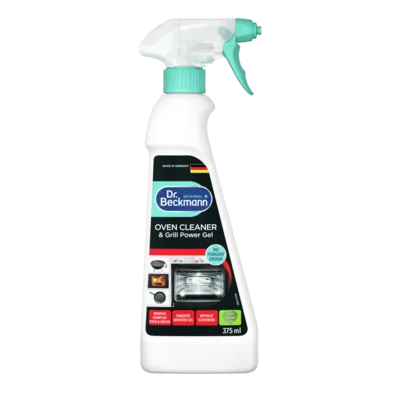
Grease and food residue can become increasingly difficult to remove after repeated heating. For stubborn burnt-on deposits, Dr. Beckmann Oven & Grill Power Gel helps dissolve grease and encrustation and, thanks to its gel formula, also adheres to vertical surfaces.
- Apply the Power Gel to the cold surfaces as directed on the product label.
- Leave it to work for at least 20 minutes, or longer for stubborn soiling.
- Wipe the treated surfaces thoroughly with a damp sponge or cloth.
- Rinse the spray nozzle after use.
Important: Only use the cleaner on suitable surfaces and avoid spraying it into openings or onto sensitive components. Always follow the product instructions and your oven manufacturer's cleaning recommendations.
Grease splashes and food residue can leave a stubborn film on the inside of the oven door. Removing this regularly helps prevent deposits from becoming burnt on.
For suitable glass surfaces, Dr. Beckmann Kitchen Cleaner Hygiene & Grease can be used to remove grease and stubborn soiling.
- Apply the cleaner according to the product instructions.
- Allow it to work briefly.
- Wipe the glass with a damp cloth or sponge.
- Remove any remaining product residue with a clean, damp cloth.
- Dry the glass thoroughly.
Tip: On some ovens, individual glass panes in the door can be removed for easier cleaning. Always consult the appliance manual before dismantling any part of the door.
Racks and baking trays are best cleaned soon after use, before grease and food residue become firmly burnt on. Light soiling can often be removed with warm water, a suitable cleaning product and a sponge or brush.
For stubborn burnt-on grease and food residue, Dr. Beckmann Oven & Grill Power Gel can be used on suitable surfaces:
- Apply the gel according to the product instructions.
- Leave it to work for at least 20 minutes, or longer if necessary.
- Wipe thoroughly with a damp sponge or cloth.
- Rinse thoroughly before using the rack or tray again.
For removable runners or side rails, check the appliance manual first. Some parts can be removed for easier cleaning, while others may require special care.
Some ovens have a pyrolytic self-cleaning function. During the programme, the oven heats to a very high temperature and breaks down food residue and grease, leaving ash that can be wiped away once the oven has cooled.
Before starting pyrolysis, check the manufacturer's instructions. Depending on the appliance, trays, racks, runners or other accessories may need to be removed before the programme starts.
Once the programme has finished and the oven has cooled completely, wipe away the remaining ash with a damp cloth.
Which home remedies help with a dirty oven?
For light soiling and everyday cleaning, simple household remedies can be a useful alternative. Bicarbonate of soda and lemon can help loosen grease and food residue, but they may not be suitable for every oven surface. Always check your oven manufacturer’s cleaning instructions before using home remedies, and never apply them to heating elements, seals, coated surfaces or other sensitive components unless recommended by the manufacturer.
Bicarbonate of soda can help loosen grease and burnt-on food residue.
Mix a few tablespoons of bicarbonate of soda with a small amount of water to form a spreadable paste. Apply it to suitable soiled surfaces and leave it to work for several hours or overnight. Then remove the paste with a damp cloth or non-scratch sponge and wipe thoroughly with clean water.
For stubborn deposits, repeat the process rather than using sharp or highly abrasive tools that could damage the oven surface.
Lemon and steam can help soften light grease and food residue while leaving a fresh scent.
Add lemon juice or lemon slices to a heatproof dish with water. Place the dish in the oven and gently heat it for around 20–30 minutes. Once the oven has cooled sufficiently, wipe the loosened residue away with a damp cloth.
Always check the oven manufacturer’s instructions before using this method, particularly for ovens with special coatings or self-cleaning functions.
Vinegar is often recommended as a household cleaner, but its acidic nature means that it may not be suitable for all oven surfaces, seals or coatings. If you want to use vinegar, first check the appliance manufacturer’s care instructions and avoid sensitive components.
Do not mix vinegar and bicarbonate of soda in the expectation of greater cleaning power. Although the mixture fizzes, the acid and alkaline components react with and partially neutralise each other.
Washing soda is more alkaline than bicarbonate of soda and can help tackle greasy deposits. However, because it is stronger, it requires more careful handling and may not be suitable for all oven materials.
If you use washing soda, follow the instructions on the packaging, wear suitable gloves and check the oven manufacturer’s care instructions first. Rinse treated surfaces thoroughly with clean water afterwards.
Brief summary
Regular oven cleaning helps prevent grease, food splashes and burnt-on residue from building up. Wipe away fresh soiling after use and give the oven a thorough clean every one to two months, depending on how often you use it and how dirty it gets.
For stubborn grease and burnt-on food residue, use a suitable oven cleaner and allow it enough time to work before wiping the surfaces thoroughly. For lighter soiling, household remedies such as bicarbonate of soda or lemon can also be useful.
Avoid sharp or abrasive tools and take particular care around sensitive surfaces and components. Always follow the cleaning product instructions and your oven manufacturer’s care recommendations.
FAQ: Cleaning ovens
Allow the oven to cool completely and remove loose food residue carefully. For stubborn burnt-on grease and deposits, use a suitable oven cleaner according to the product instructions. For lighter soiling, a bicarbonate-of-soda paste can also help loosen residue. Wipe the treated surfaces thoroughly with a clean, damp cloth afterwards and always follow the oven manufacturer’s cleaning recommendations.
Allow the oven to cool completely before cleaning the glass. Wipe away loose residue and use a suitable cleaner to remove grease and food splashes. Clean the glass with a damp, non-scratch cloth or sponge, remove any cleaner residue and dry thoroughly. On some ovens, individual glass panes can be removed for easier cleaning. Check the appliance manual before removing any part of the door.
Clean racks and trays as soon as grease or food residue becomes visible to prevent stubborn build-up. Light soiling can often be removed with warm water and a suitable cleaner using a non-scratch sponge or brush. For heavily burnt-on residue, use a suitable oven cleaner and allow it to work according to the product instructions before wiping or rinsing thoroughly. Always check that the cleaner is suitable for the material.
Pyrolysis is a self-cleaning function available on some ovens. The oven heats to a very high temperature, breaking down grease and food residue and leaving behind ash that can be wiped away once the oven has cooled. Before starting the programme, always follow the manufacturer’s instructions, as racks, trays, runners or other accessories may need to be removed.
Wipe away fresh food splashes, grease and crumbs after use whenever possible. As a general guide, give the oven a thorough clean every one to two months, depending on how often you use it and how much residue has built up. Racks and trays should be cleaned whenever visible grease or food residue appears.
Discover more cleaning solutions
From the oven to other areas of your home, Dr. Beckmann offers practical cleaning solutions for a wide range of everyday cleaning challenges. Explore the range and find the right solution for your home.