How to Clean Your Ceramic Hob
Last updated:
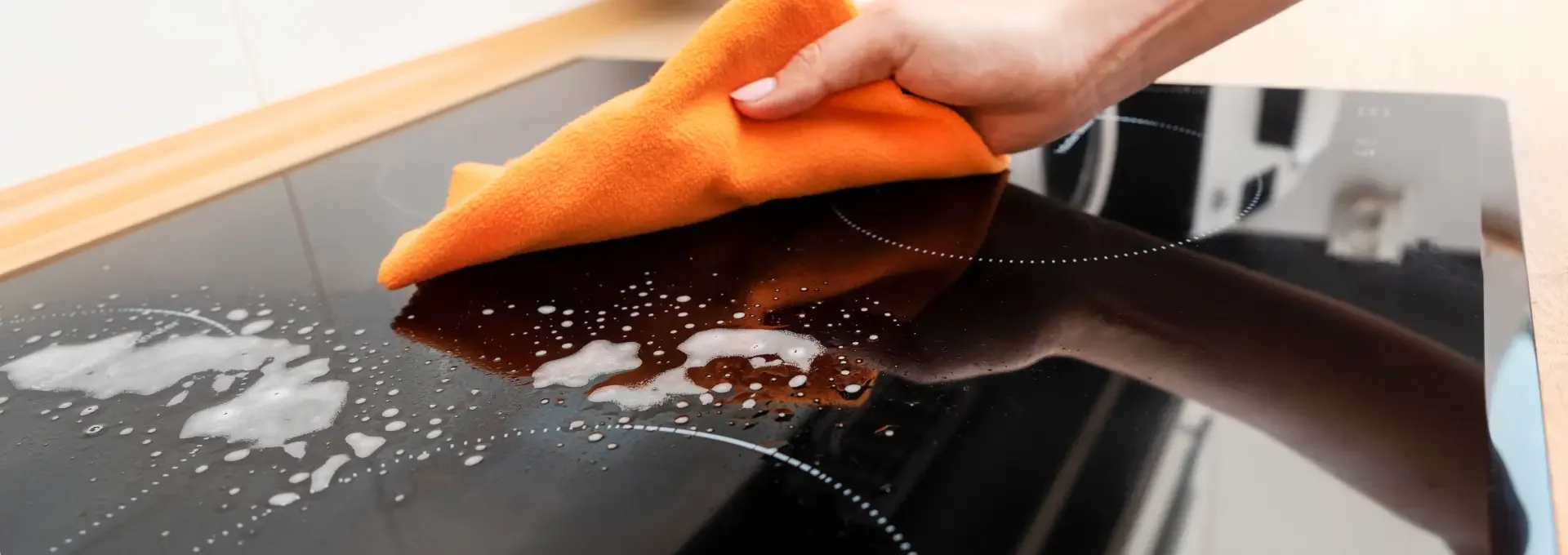
Pasta water boils over, sauce splashes out of the pan and food residue burns onto the hob – everyday cooking can quickly leave its mark on a glass ceramic surface. Regular cleaning helps remove grease, food residue and water marks while keeping the hob looking clean and well cared for. Whether you have a radiant, induction or other glass ceramic hob, the right cleaning method is important to avoid scratches and stubborn build-up.
What matters when cleaning a glass ceramic hob?
- Allow the hob to cool before routine cleaning.
- Wipe away fresh grease, food residue and water marks regularly to prevent stubborn build-up.
- Avoid steel wool, abrasive cleaners and other materials that could scratch the surface.
- Use a suitable glass ceramic scraper carefully for stubborn burnt-on residue, following the hob manufacturer’s instructions.
- Choose cleaners specifically suitable for glass ceramic surfaces.
- Always follow the appliance manufacturer’s cleaning and care recommendations.
Does the type of hob make a difference?
Glass ceramic surfaces are used with different heating technologies, including radiant and induction hobs. While the heating technology may differ, the basic care principles for the glass ceramic surface are similar: avoid abrasive materials, use suitable cleaning products and follow the appliance manufacturer’s instructions.
Which products help to solve the problem?
From everyday grease and water marks to stubborn burnt-on food residue, different types of soiling require different levels of cleaning. Dr. Beckmann offers specialized cleaning solutions for glass ceramic surfaces, although the available product range may vary by country.
For everyday cleaning: Choose a suitable glass ceramic cleaner for light grease, water marks and everyday cooking residue.
For stubborn deposits: A more intensive glass ceramic cleaner can help tackle stubborn grease, limescale and dried-on food residue.
For heavily burnt-on residue: Choose a product specifically designed for stubborn deposits on glass ceramic surfaces.
Always follow the product instructions and your hob manufacturer’s care recommendations.

Cleaning your glass ceramic hob the right way
The best way to clean a glass ceramic hob depends on how heavily it is soiled. Always allow the hob to cool before routine cleaning and follow both the product instructions and your appliance manufacturer’s care recommendations.
Regular cleaning helps prevent grease, water marks and food residue from becoming stubborn deposits.
For light everyday soiling, use a cleaner suitable for glass ceramic surfaces. Apply the product according to the instructions, wipe the surface with a soft cloth or non-scratch sponge and remove any remaining residue with a clean, damp cloth. Dry the surface thoroughly for a clean, shiny finish.
Grease, limescale and dried-on food residue may require more intensive cleaning. Use a suitable glass ceramic cleaner or cleaning product designed for more stubborn deposits.
Allow the product to work as directed before gently cleaning the affected areas. Remove any remaining product residue thoroughly with a clean, damp cloth and dry the surface afterwards.
For heavily burnt-on food residue, choose a cleaning product specifically suitable for stubborn deposits on glass ceramic surfaces.
Apply and use the cleaner according to the product instructions. If residue cannot be removed with cleaner alone, a scraper specifically designed for glass ceramic hobs may help. Use it carefully according to the scraper and appliance manufacturer’s instructions. Never use knives or other unsuitable sharp objects.
Avoid steel wool, abrasive scouring products and cleaning tools that could scratch the glass ceramic surface. Make sure the bases of pots and pans are clean, and lift cookware rather than sliding it across the hob.
For cleaning, use only products, sponges and scrapers that are suitable for glass ceramic surfaces.
Which home remedies help with a dirty glass ceramic hob?
For light everyday soiling, some household remedies can be useful if they are suitable for your hob. However, acidic or abrasive substances may not be recommended for every surface or appliance. Always check the hob manufacturer’s care instructions before using a home remedy.
A bicarbonate-of-soda paste can help loosen some dried-on food residue. Mix a small amount with water to form a soft paste, apply it carefully to the affected area and leave it to work briefly. Remove it gently with a damp, soft cloth and wipe the surface thoroughly with clean water.
Avoid vigorous scrubbing and stop if the manufacturer advises against using bicarbonate of soda on the surface.
Diluted vinegar is often used to tackle water marks and light deposits. However, because vinegar is acidic, it may not be suitable for all surfaces or surrounding components. Check the manufacturer’s instructions before use and keep it away from materials that may be sensitive to acids.
Lemon juice is another commonly used household remedy for light grease and marks. As with vinegar, its acidity means that it should only be used if permitted by the hob manufacturer. Wipe the surface thoroughly with clean water afterwards.
Brief summary
Regular cleaning helps prevent grease, food residue and water marks from becoming stubborn deposits on a glass ceramic hob. Wipe away light soiling regularly and use a suitable glass ceramic cleaner for more stubborn or burnt-on residue.
Avoid abrasive cleaners, steel wool and dragging cookware across the surface to help prevent scratches. For light soiling, selected household remedies may also be useful if they are suitable for your hob.
Always follow the cleaning product instructions and your hob manufacturer’s care recommendations.
FAQ: Cleaning glass ceramic hobs
Allow the hob to cool before cleaning. Remove stubborn residue carefully with a scraper specifically designed for glass ceramic surfaces, following the scraper and appliance manufacturer’s instructions. Treat any remaining deposits with a suitable glass ceramic cleaner, then wipe the surface thoroughly with a clean, damp cloth and dry it. Avoid knives or other sharp objects that could damage the surface.
Once the hob has cooled, wipe away grease, food residue and water marks with a soft, damp cloth. For more persistent everyday soiling, use a cleaner specifically suitable for glass ceramic surfaces. Remove any product residue with a clean, damp cloth and dry the surface thoroughly to help prevent water marks.
Avoid steel wool, abrasive scouring products and other cleaning tools that could scratch the surface. Make sure the bases of pots and pans are clean and lift cookware rather than sliding it across the hob. For stubborn deposits, use only cleaners, sponges and scrapers that are suitable for glass ceramic surfaces.
A scraper specifically designed for glass ceramic hobs can help remove stubborn burnt-on residue. Use it carefully and always follow the scraper and appliance manufacturer’s instructions. Never use knives or other unsuitable sharp objects, as these could damage the surface.
Discover more household cleaners
From the kitchen to other areas of your home, Dr. Beckmann offers practical cleaning solutions for a wide range of everyday cleaning challenges. Explore the range and find the right products for your home.