
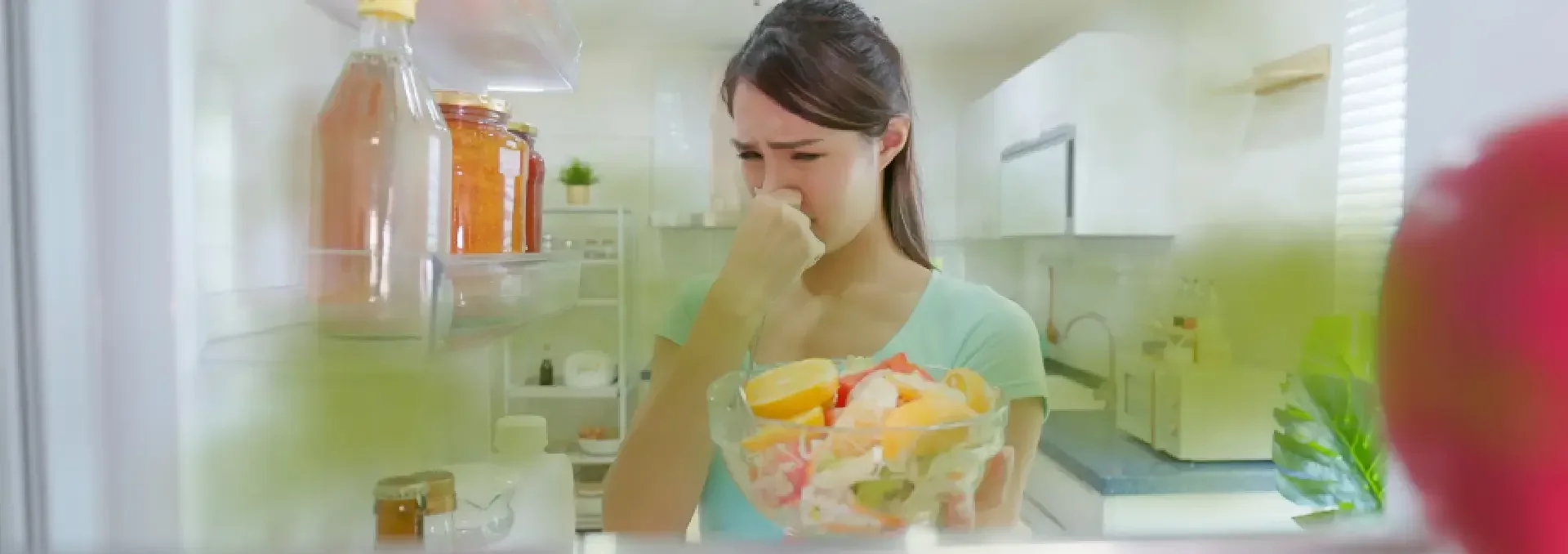
Fridge smells: causes and what to do
Last updated:
You open your fridge and notice an unpleasant smell. Perhaps the odour becomes noticeable as soon as you open the door, comes from a particular drawer or shelf, or remains even after spoiled food has been removed.
Food, leaking containers, spills, moisture and other residue can cause unpleasant smells inside a refrigerator. Some sources are easy to find, while others may be hidden underneath drawers, around door seals or in other less visible areas.
Finding out where the smell is coming from can help you identify which areas need attention. Regular checks, appropriate cleaning and correct food storage can also help prevent unpleasant odours from returning.
Why does my fridge smell?
Several factors can contribute to unpleasant smells inside a refrigerator. Spoiled or uncovered food is an obvious cause, but residue, spills and moisture can also collect in different parts of the appliance.
Spoiled or forgotten food
Food that has spoiled is one of the most obvious sources of unpleasant fridge smells. Items stored at the back of shelves or inside drawers can sometimes remain unnoticed.
Check the contents of your refrigerator regularly and remove food that has spoiled or is no longer suitable for consumption.
Strong-smelling or uncovered food
Some foods naturally have a strong smell. If they are stored uncovered or in unsuitable packaging, their odour can spread throughout the refrigerator.
Store opened or strong-smelling food in suitable closed containers and follow appropriate food-storage recommendations.
Leaking containers and spills
Milk, sauces, juices and other liquids can leak from containers or spill onto shelves and into drawers. If they are not removed promptly, residue can dry onto surfaces and become a source of unpleasant smells.
Wipe away spills as soon as possible and check underneath containers for hidden residue.
Food residue under shelves and drawers
Crumbs, food particles and liquids can collect underneath removable shelves, drawers and compartments.
These areas can easily be overlooked during everyday cleaning, so check them if you cannot immediately identify where a smell is coming from.
Residue around the door seals
Food residue, liquids and other dirt can collect on or around refrigerator door seals.
Check the seals regularly and wipe away visible residue with a soft, damp cloth. Use only cleaning products suitable for the relevant material.
Moisture and condensation
Moisture naturally occurs inside refrigerators. If moisture combines with food residue or collects in certain areas, it may contribute to unwanted smells.
Follow your refrigerator manufacturer's recommendations regarding appliance care, airflow and condensation.
Residue around the condensation drain
Depending on the refrigerator design, condensation may drain through an opening or channel inside the appliance. Food particles or other residue can sometimes collect around this area.
If your refrigerator has a condensation drain, inspect and clean it only according to the appliance manufacturer's instructions.
Hidden residue around condensation drains is particularly relevant when a fridge continues to smell after visible areas have already been cleaned.
Where is the smell coming from?
Identifying where the odour is strongest can help you find the area that requires attention.
The fridge smells when you open the door
If an unpleasant smell becomes noticeable as soon as you open the refrigerator, start by checking the food inside.
Remove spoiled items and inspect opened packages and containers for leaks. Then check shelves, drawers and other surfaces for spills or food residue.
The vegetable drawer smells
Fruit, vegetables and other food can deteriorate unnoticed inside refrigerator drawers. Liquids or small pieces of food can also collect underneath the drawer.
Remove the contents and check both the drawer and the area underneath it for spoiled food, moisture or residue.
The door seals smell
If the smell seems strongest around the refrigerator door, check the seals and surrounding areas for food residue, liquids or other dirt.
Wipe the area carefully using a soft, damp cloth and only use cleaning products suitable for the material.
The fridge smells even after removing spoiled food
Removing the food responsible for the original smell may not immediately solve the problem if liquid or residue has leaked onto another surface.
Check shelves, drawers, door compartments, seals and the areas underneath removable components. Clean any affected areas with a product suitable for refrigerator interiors.
The fridge smells even after cleaning
If the refrigerator still smells after cleaning, check areas that may have been overlooked.
Residue may be hidden underneath drawers, around seals or in other hard-to-reach areas. Depending on the appliance design, the condensation drain may also require checking according to the manufacturer's instructions. Current guidance on persistent refrigerator odours similarly highlights these less visible areas.
If you cannot locate the source or suspect a technical problem, consult the appliance manufacturer's troubleshooting information or an appropriate service technician.
How to remove unpleasant smells from a fridge
If your refrigerator smells unpleasant, systematically check the areas where food, liquids and other residue are most likely to accumulate.
1. Check the food
Inspect the food stored in the refrigerator and remove anything that has spoiled.
Pay particular attention to opened packages, leftovers, fruit and vegetables and items stored towards the back of shelves or drawers.
2. Check for leaking containers and spills
Inspect bottles, jars, containers and packaging for leaks.
Wipe away fresh spills and remove any residue from shelves, drawers and other affected surfaces.
3. Check shelves and drawers
Remove shelves and drawers where permitted by the appliance manufacturer.
Check the components themselves as well as the areas underneath and behind them for food particles, liquid or sticky residue.
4. Check the door seals
Inspect the seals and surrounding areas for visible residue.
Wipe them carefully with a soft, damp cloth and use only products suitable for the material.
5. Check the condensation area if applicable
If your refrigerator has a condensation drain or similar accessible component, check it according to the appliance manufacturer's instructions.
Do not dismantle appliance components unless this is specifically recommended by the manufacturer.
6. Clean affected areas
Clean surfaces where food residue, spills or other dirt have accumulated.
Use only cleaning products suitable for refrigerator interiors and the relevant surface materials.
For a more thorough clean, see our guide How to clean a fridge.
7. Use a suitable refrigerator cleaner
A product specifically designed for refrigerator interiors can provide a more targeted option for removing food residue and other contamination.
After the source of the smell has been removed and any affected areas have been cleaned, a refrigerator odour absorber can help neutralise remaining unwanted smells.
Can home remedies remove fridge smells?
Household remedies such as bicarbonate of soda, vinegar or lemon are sometimes used to tackle unpleasant fridge smells. However, they should not replace removing spoiled food or cleaning the actual source of the odour.
Not every substance is suitable for every refrigerator surface or material. Always check the appliance manufacturer's care instructions before using a household remedy.
For detailed information about home remedies, see Can home remedies be used to clean a fridge? in our refrigerator cleaning guide.
Bicarbonate of soda, vinegar and lemon are among the commonly recommended household approaches for fridge odours, so they are worth capturing semantically without turning this article into a separate home-remedy guide.
How to help prevent fridge smells
Regular care and correct food storage can help prevent unwanted odours from developing.
- Check stored food regularly and remove spoiled food promptly.
- Store opened and strong-smelling food in suitable closed containers.
- Make sure bottles, jars and containers are securely closed.
- Wipe away spills before they dry.
- Remove crumbs and loose food residue regularly.
- Check underneath drawers and removable components for hidden residue.
- Keep door seals and surrounding areas clean.
- Clean sticky bottles, jars and containers before putting them back.
- Clean the refrigerator regularly according to how frequently it is used and how heavily it is soiled.
- Follow your refrigerator manufacturer's recommendations regarding food storage, airflow and appliance care.
- Use only cleaning products suitable for refrigerator interiors.
Brief summary
Unpleasant fridge smells can develop because of spoiled or strong-smelling food, leaking containers, spills, moisture or residue hidden inside the appliance.
If your refrigerator smells, first identify the source. Check food, shelves, drawers, door compartments and seals and clean any affected areas according to your appliance manufacturer's instructions.
If the smell remains after cleaning, check less visible areas underneath removable components and, where applicable, the condensation drain.
Regular food checks, correct storage and prompt removal of spills can help prevent unpleasant smells from returning.
For complete step-by-step cleaning instructions for shelves, drawers, seals and the refrigerator interior, see our guide How to clean a fridge.
FAQ
Spoiled food, strong-smelling uncovered food, leaking containers, spills, moisture and hidden food residue can all contribute to unpleasant fridge odours.
Residue may remain in an area that was overlooked, such as underneath a drawer, around a door seal or, depending on the refrigerator design, around the condensation drain.
Check for leaking containers, dried spills and food residue underneath shelves and drawers or around door seals. Strong-smelling food stored in open packaging can also contribute to refrigerator odours.
First find and remove the source of the smell. Check stored food, containers, shelves, drawers and seals and clean any affected surfaces. If the smell remains, inspect less visible areas according to the refrigerator manufacturer's instructions.
Bicarbonate of soda is commonly used to absorb mild refrigerator odours. However, it does not replace removing spoiled food or cleaning the source of the smell.
Check food regularly, keep opened and strong-smelling food appropriately covered, wipe up spills promptly and clean shelves, drawers, door compartments and seals when needed.
Odour-absorbing products designed for refrigerators can help control residual unwanted smells after the source has been removed. Some household substances such as bicarbonate of soda are also commonly used for mild odours.
Discover more refrigerator care solutions
Regular care helps keep your refrigerator and other areas of your home clean and well maintained. Discover the Dr. Beckmann cleaning solutions and find the right products for your everyday cleaning needs.
